Military service

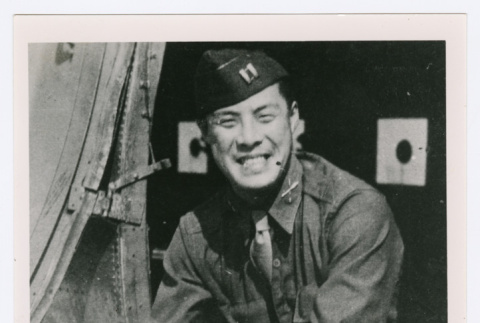
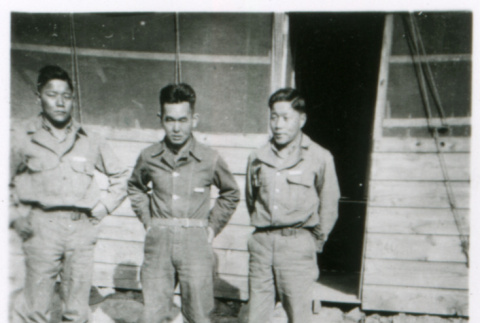
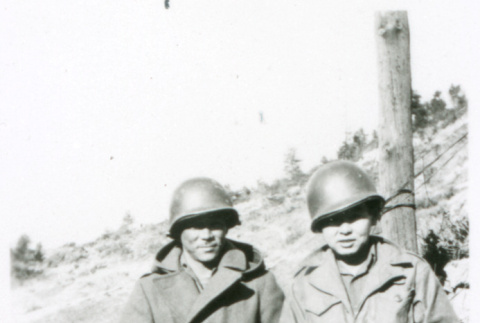
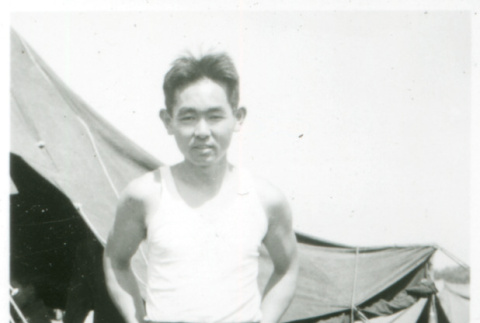
The story of Japanese Americans in the military during World War II is complex and in many ways ironic. It is a story of mistrust by the very country for which these soldiers placed themselves in harms' way. Many were drafted directly out of the camps and fought for democracy abroad while their parents and families were incarcerated by their own government.

World War II (283)
Military service (4287)

Related articles from the Densho Encyclopedia :
298th/299th Infantry, Charles H. Bonesteel, Buddhahead, Fighting for Tomorrow: Japanese Americans in America's Wars (exhibition), Frank "Foo" Fujita, GI Bill, Hawaii Territorial Guard, Hood River incident, Japanese American World War II military service memorials, Japanese Americans in military during World War II, Samuel Wilder King, Kotonk, Ben Kuroki, Spark Matsunaga, None, Rescue of the Lost Battalion, Revolution of 1954, Shigeo Yoshida
Facilities
Format
Genre
Usage

Use <Ctrl> or (⌘) keys to select multiple terms

4287 items
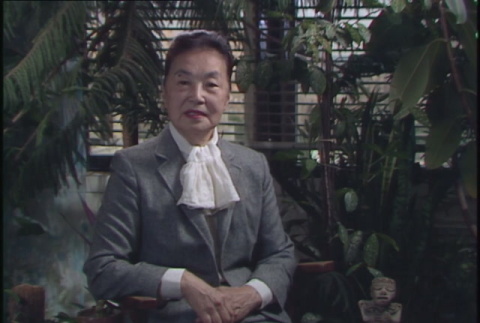
Interview with Arthur (Art) Morimitsu, part 1 of 6 (ddr-densho-1007-1749)
av Interview with Arthur (Art) Morimitsu, part 1 of 6 (ddr-densho-1007-1749)
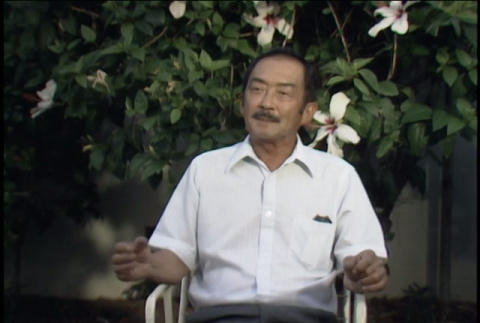
Morimitsu discusses evacuation, his family's internment at Tule Lake, anti-Japanese sentiment after Pearl Harbor, being recruited by the military, and camp attitudes towards recruitment. Loni Ding can be heard asking questions in the background. Original title: 58B, II VFW #1, VFW - Art Morimitsu, Feb. 15, 1987. Interview continues at ddr.densho.org/ddr-densho-1007-1750/
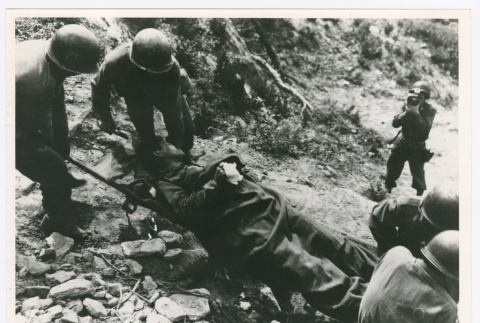
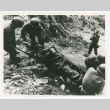
Rescuer and the rescued (ddr-densho-1007-405)
img Rescuer and the rescued (ddr-densho-1007-405)
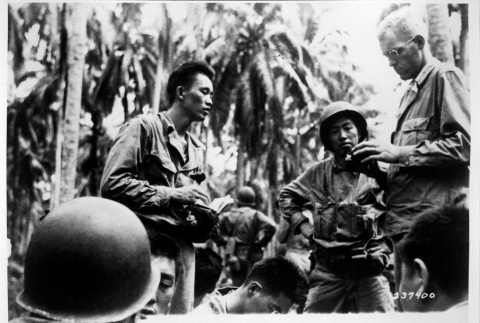
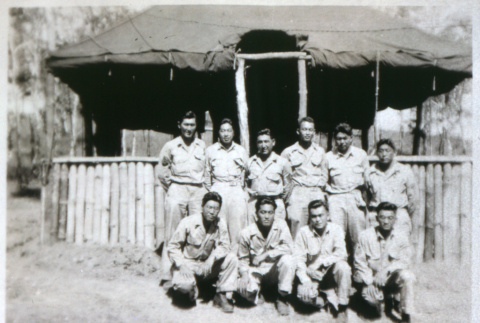
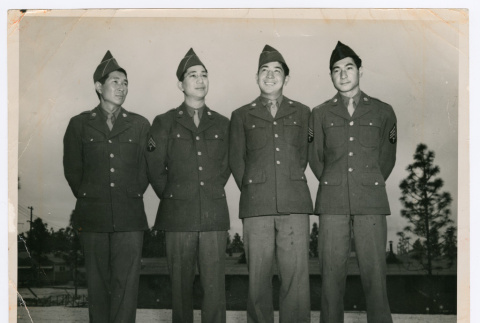
From left to right: Eilchi Koyama, Guinji Akimoto, Fredrick Bailey and Makito Haha. Caption on back.
Interview with Gary and Grace Itano, part 3 of 6 (ddr-densho-1007-1807)
av Interview with Gary and Grace Itano, part 3 of 6 (ddr-densho-1007-1807)
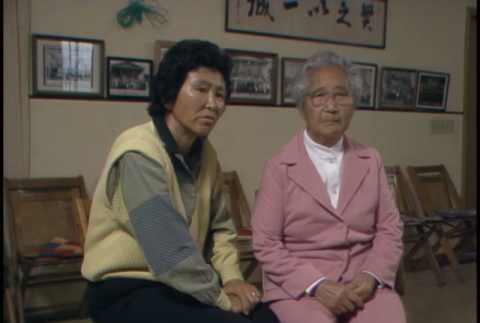
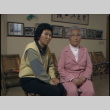
Grace discusses moving to Orange County after her husband's death, her impressions of the DB Boys and her relationship with them, Gary discusses learning about the DB Boys, his father's plans for his children, how going to Japan helped broaden his worldview, and his father's philosophy. Interview starts at 0:55. Loni Ding can be heard asking …
Tomosu Hirahara's gravestone (ddr-densho-1007-582)
img Tomosu Hirahara's gravestone (ddr-densho-1007-582)
Hirahara was a member of the 442nd. Memorial Day was on May 25 in 1987, but it's unclear if this was taken on that exact date. Caption on back.
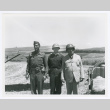
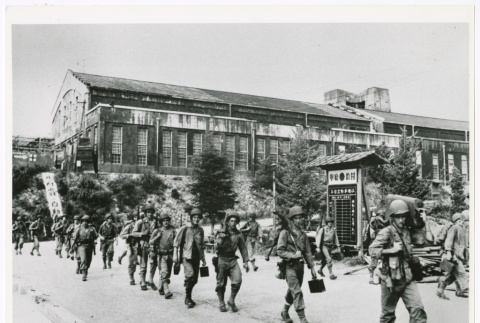
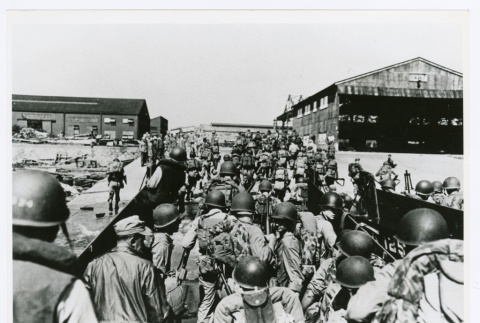
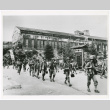
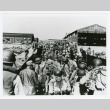
Soldiers with backpacks (ddr-densho-1007-693)
img Soldiers with backpacks (ddr-densho-1007-693)
Slide, created in September 1984. Image date unknown.
Interview with Yukio Kawamoto, part 6 of 8 (ddr-densho-1007-1550)
av Interview with Yukio Kawamoto, part 6 of 8 (ddr-densho-1007-1550)
Kawamoto discusses post-war occupation of Japan, work with the military tribunal & ATIS, working for the US government at home, and the decision to volunteer. Video starts at 0:50. Loni Ding can be heard asking questions behind the camera. Original title: II NY #34, 6-85, Kawamoto.. Interview continues at ddr.densho.org/ddr-densho-1007-1551/
Interview with Moose (John) Fujikawa, part 3 of 4 (ddr-densho-1007-1584)
av Interview with Moose (John) Fujikawa, part 3 of 4 (ddr-densho-1007-1584)
Fujikawa discusses the Japanese surrender, post-war Japan, returning from the war, and meeting his son upon return. Video starts at 0:29. Loni Ding can be heard asking questions behind the camera. Original title: II LA #11, Fujikawa III, 7-23-85. Interview continues at ddr.densho.org/ddr-densho-1007-1585/
API