Registration and the "loyalty questionnaire"

To help administer the military draft and work release program, the U.S. Army and the War Relocation Authority (WRA) produced "loyalty questionnaires" for all Japanese Americans seventeen years of age and older. The questionnaires contained two questions that caused confusion and controversy. Despite serious problems with the wording and meaning of the questions, government officials and others generally considered those who answered "no" to these two questions to be "disloyal" to the United States, and they were transferred to the Tule Lake concentration camp which was designated a segregation camp. "Yes" answers to these questions made Japanese Americans eligible for service in the U.S. Army, and some became eligible for release and resettlement in areas outside of the West Coast exclusion zones.

World War II (285)
Administration (228)
Registration and the "loyalty questionnaire" (294)

Related articles from the Densho Encyclopedia :
Japanese American Joint Board, Loyalty questionnaire, Segregation

Facilities
Format
Genre
Usage

Use <Ctrl> or (⌘) keys to select multiple terms

152 items
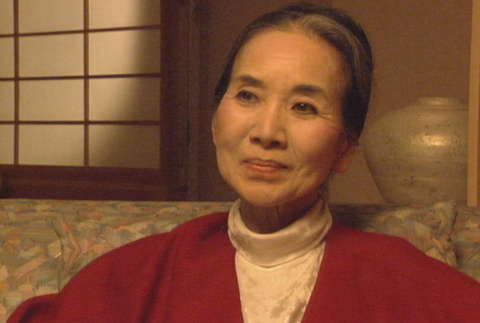
Lilly Kodama Interview Segment 8 (ddr-densho-1001-19-8)
vh Lilly Kodama Interview Segment 8 (ddr-densho-1001-19-8)
Parents' disagreement over answers to the so-called "loyalty questions"
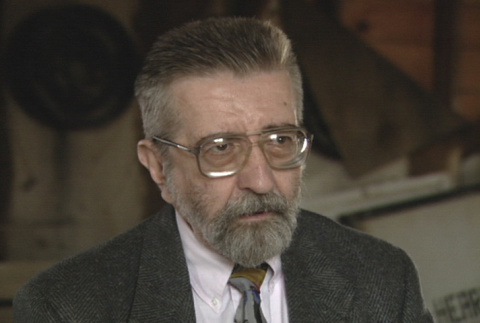
Minoru Kiyota Segment 9 (ddr-densho-1000-36-9)
vh Minoru Kiyota Segment 9 (ddr-densho-1000-36-9)
Description of FBI interrogation in camp, and impact on response to the so-called "loyalty questionnaire"

This interview was conducted at the 1998 Tule Lake Pilgrimage held at Klamath Falls, Oregon and at the site of Tule Lake incarceration camp in California. Given the limited time available during this event, the length and breadth of this interview …
Paul Nagano Segment 8 (ddr-densho-1000-65-8)
vh Paul Nagano Segment 8 (ddr-densho-1000-65-8)
Christian faith and social justice: dealing with so-called "loyalty questionnaire," and military service
Paul Nagano Segment 9 (ddr-densho-1000-65-9)
vh Paul Nagano Segment 9 (ddr-densho-1000-65-9)
Animosity between "yes-yes" and "no-no" respondents in concentration camp
Bill Nishimura Interview Segment 6 (ddr-densho-1000-119-6)
vh Bill Nishimura Interview Segment 6 (ddr-densho-1000-119-6)
Responding "no-no" to so-called "loyalty questionnaire"

This interview took place at the 2000 Tule Lake Pilgrimage in Klamath Falls, Oregon.

Kara Kondo Interview Segment 34 (ddr-densho-1000-139-34)
vh Kara Kondo Interview Segment 34 (ddr-densho-1000-139-34)
Thoughts on military service and the so-called "loyalty questionnaire"
Satsuki Ina Segment 2 (ddr-densho-1000-474-2)
vh Satsuki Ina Segment 2 (ddr-densho-1000-474-2)
During World War II, parents answered "no-no" on the so-called "loyalty questionnaire"
Sarah Sato Segment 19 (ddr-densho-1000-81-19)
vh Sarah Sato Segment 19 (ddr-densho-1000-81-19)
Answering the so-called "loyalty questions," being classified as a "no-no"
Sarah Sato Segment 21 (ddr-densho-1000-81-21)
vh Sarah Sato Segment 21 (ddr-densho-1000-81-21)
Transfer with family to Tule Lake concentration camp, California, as "no-nos"
Hiroshi Kashiwagi Interview Segment 17 (ddr-densho-1000-165-17)
vh Hiroshi Kashiwagi Interview Segment 17 (ddr-densho-1000-165-17)
Witnessing tension and conflict between "yes-yeses" and "no-nos" in Tule Lake
Hiroshi Kashiwagi Interview Segment 16 (ddr-densho-1000-165-16)
vh Hiroshi Kashiwagi Interview Segment 16 (ddr-densho-1000-165-16)
Reaction to the so-called "loyalty questionnaire": making the decision to resist the draft
Masako Murakami Interview Segment 5 (ddr-manz-1-166-5)
vh Masako Murakami Interview Segment 5 (ddr-manz-1-166-5)
Father's answering "no-no" on the so-called "loyalty questionnaire"
Jim Akutsu Interview Segment 7 (ddr-densho-122-12-7)
vh Jim Akutsu Interview Segment 7 (ddr-densho-122-12-7)
Answers to the so-called "loyalty questions"

This interview was conducted by filmmaker Frank Abe for his 2000 documentary, Conscience and the Constitution, about the World War II resisters of conscience at the Heart Mountain incarceration camp. As a result, the interviews in this collection are typically not life histories, instead primarily focusing on issues surrounding …

Frank Emi Interview II Segment 5 (ddr-densho-122-20-5)
vh Frank Emi Interview II Segment 5 (ddr-densho-122-20-5)
Discussion of the leave clearance questionnaire: "I felt so strongly that these questions were very unfair and stupid"

This interview was conducted by filmmaker Frank Abe for his 2000 documentary, Conscience and the Constitution, about the World War II resisters of conscience at the Heart Mountain incarceration camp. As a result, the interviews in this …
Michi Weglyn Interview Segment 9 (ddr-densho-122-22-9)
vh Michi Weglyn Interview Segment 9 (ddr-densho-122-22-9)
Questions over whether the leave clearance questionnaire was compulsory

This interview was conducted by filmmaker Frank Abe for his 2000 documentary, Conscience and the Constitution, about the World War II resisters of conscience at the Heart Mountain incarceration camp. As a result, the interviews in this collection are typically not life histories, instead primarily focusing …

Michi Weglyn Interview Segment 8 (ddr-densho-122-22-8)
vh Michi Weglyn Interview Segment 8 (ddr-densho-122-22-8)
The impact of the "loyalty oath": stirrings of organized resistance

This interview was conducted by filmmaker Frank Abe for his 2000 documentary, Conscience and the Constitution, about the World War II resisters of conscience at the Heart Mountain incarceration camp. As a result, the interviews in this collection are typically not life histories, instead primarily …

Roger Daniels Interview Segment 5 (ddr-densho-122-25-5)
vh Roger Daniels Interview Segment 5 (ddr-densho-122-25-5)
Discussion of the leave clearance questionnaire: "it was stupid and counterproductive"

This interview was conducted by filmmaker Frank Abe for his 2000 documentary, Conscience and the Constitution, about the World War II resisters of conscience at the Heart Mountain incarceration camp. As a result, the interviews in this collection are typically not life histories, instead …

Michi Weglyn Interview Segment 5 (ddr-densho-122-22-5)
vh Michi Weglyn Interview Segment 5 (ddr-densho-122-22-5)
The unfairness of the two so-called "loyalty questions"

This interview was conducted by filmmaker Frank Abe for his 2000 documentary, Conscience and the Constitution, about the World War II resisters of conscience at the Heart Mountain incarceration camp. As a result, the interviews in this collection are typically not life histories, instead primarily focusing on …

Michi Weglyn Interview Segment 3 (ddr-densho-122-22-3)
vh Michi Weglyn Interview Segment 3 (ddr-densho-122-22-3)
Theory as to why the leave clearance questionnaire was instituted

This interview was conducted by filmmaker Frank Abe for his 2000 documentary, Conscience and the Constitution, about the World War II resisters of conscience at the Heart Mountain incarceration camp. As a result, the interviews in this collection are typically not life histories, instead primarily …

Michi Weglyn Interview Segment 1 (ddr-densho-122-22-1)
vh Michi Weglyn Interview Segment 1 (ddr-densho-122-22-1)
Discussion of the so-called "loyalty questionnaire" and the problems it posed for the Issei and Nisei

This interview was conducted by filmmaker Frank Abe for his 2000 documentary, Conscience and the Constitution, about the World War II resisters of conscience at the Heart Mountain incarceration camp. As a result, the interviews in this collection are …

API