
Nisei
The Nisei (second generation) felt the pull of two cultures. American born, attending public schools, and influenced by American popular culture, they shared the same idols, favorite songs and sports heroes as most other children of their generation. Wanting to fit in, many Nisei with Japanese first names dropped them for Western ones that their non-Japanese friends could easily pronounce. Yet, most grew up in Japanese neighborhoods, and their parents taught them the customs and values of the old country.
Identity and values
(362)
Nisei
(2567)
Related articles from the
Densho Encyclopedia :
Nisei
2567 items
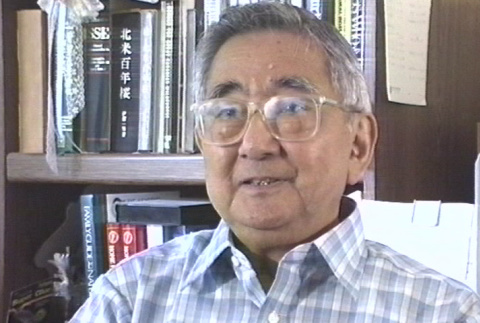
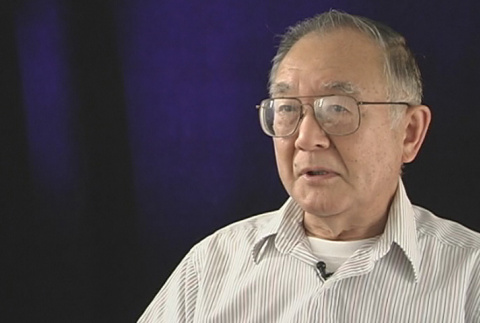
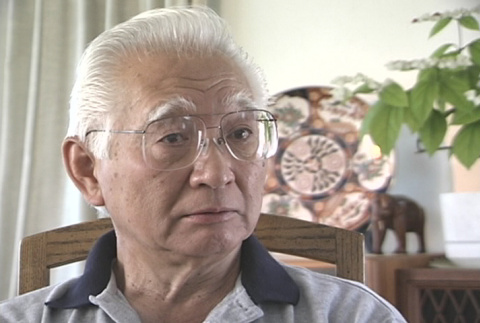
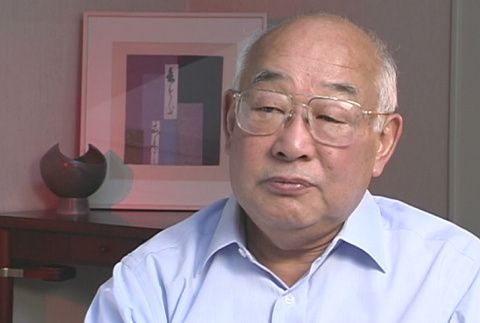
2567 items
vh
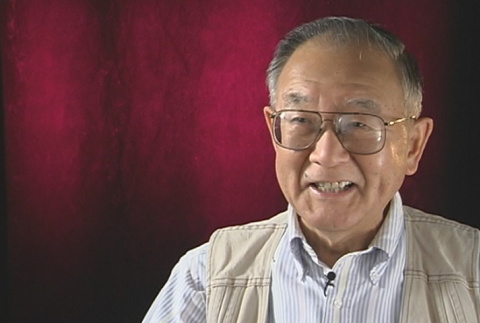
Tsuguo "Ike" Ikeda Interview I (ddr-densho-1000-123)
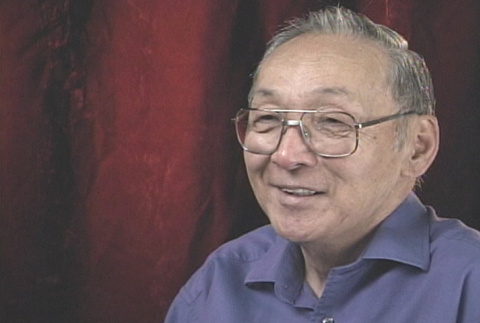
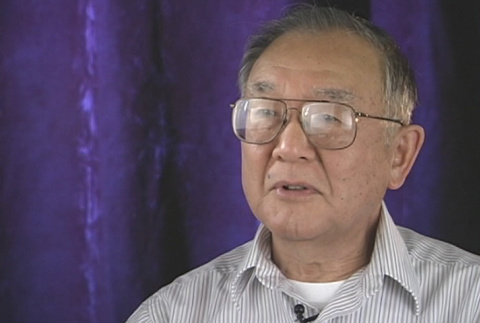
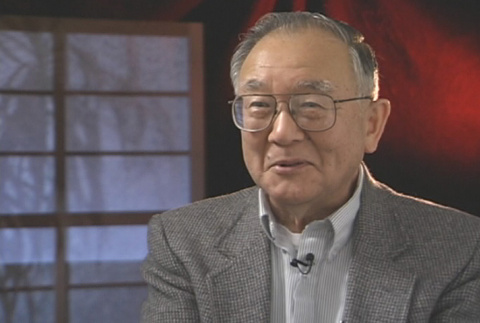
Nisei male. Born August 15, 1924, in Portland, Oregon. Incarcerated at the North Portland Assembly Center and Minidoka concentration camp, Idaho. Kept a diary beginning December, 1941, and through incarceration. Beginning as a teenager, was exceptionally active as a volunteer leader, first within a Japanese American church in Portland, later in camp with Federated Christian Church, …
vh
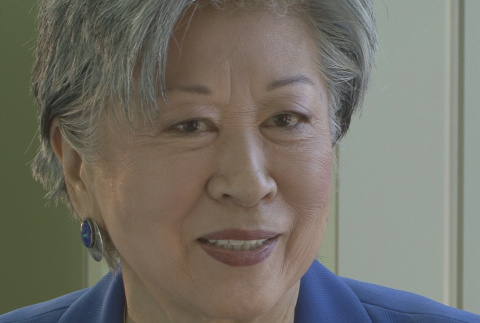
Rose Matsui Ochi Interview I (ddr-densho-1000-276)
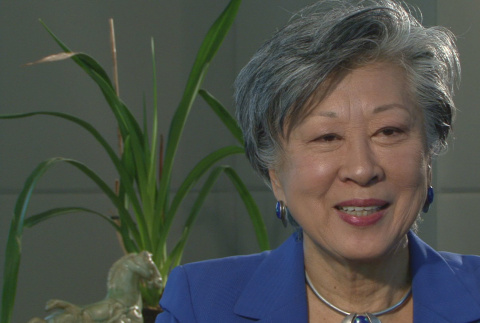
Nisei female. Born December 15, 1938, in Los Angeles, California. As a child, removed to the Santa Anita Assembly Center, California, and the Rohwer concentration camp, Arkansas. Following World War II, became a teacher and then went to law school. In 1974, worked for Los Angeles Mayor Bradley as a legislative research coordinator and eventually executive …
vh
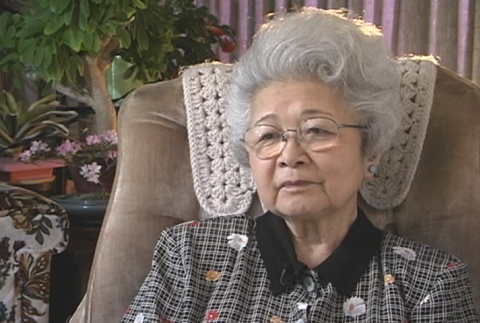
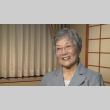
Grace Watanabe Kimura Interview (ddr-densho-1000-249)
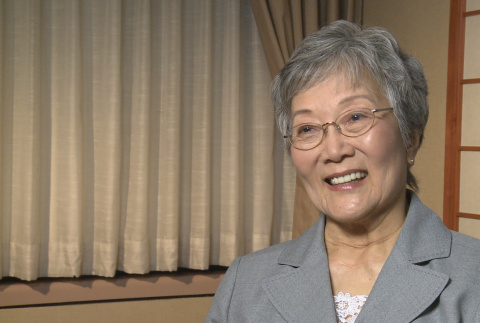
Nisei female. Born 1925 in Los Angeles, California. Grew up in Boyle Heights, where father was a prominent Baptist minister, establishing his own church. Following the bombing of Pearl Harbor on December 7, 1941, removed with family to the Poston concentration camp, Arizona. Obtained student leave to finish high school in Abilene, Texas. Post-World War II, …
vh
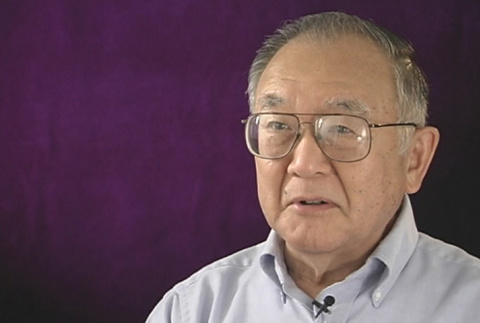
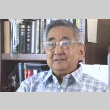
Jim Akutsu Interview (ddr-densho-1000-2)
Nisei male. Born January 25, 1920, in Seattle, Washington. Incarcerated at the Puyallup Assembly Center, Washington, and Minidoka concentration camp, Idaho. Resisted the draft, with the rationale that the U.S. government had classified him 4-C, an enemy alien, and he was therefore under no obligation to serve. Imprisoned at McNeil Island Penitentiary, Washington. Vocal critic of …
vh
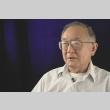
Henry Miyatake Interview IV (ddr-densho-1000-56)
Nisei male. Born April 28, 1929, in Seattle, Washington. Incarcerated at Puyallup Assembly Center and Minidoka concentration camp, Idaho. Had some key childhood experiences with discrimination that made him a self-described, "independent thinker," and later, an influential figure in the Japanese American community. While a teenager in camp, he wrote and defended an essay criticizing the …
vh
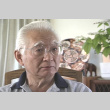
Gene Akutsu Interview I (ddr-densho-1000-1)
Nisei male. Born September 23, 1925, in Seattle, Washington. Spent prewar childhood in Seattle's Nihonmachi. Incarcerated at Puyallup Assembly Center, Washington, and Minidoka concentration camp, Idaho. Refused to participate in the draft and was imprisoned at McNeil Island Penitentiary, Washington, for draft resistance. Resettled in Seattle.
vh
Tomio Moriguchi Interview II (ddr-densho-1000-60)
Ni-ten-gosei (Nisei/Sansei) male. Born April 16, 1936, in Tacoma, Washington. During World War II, was incarcerated with his family at the Tule Lake concentration camp, California. After the war, resettled in Seattle's Nihonmachi, where his father reestablished the family business, Uwajimaya, selling Japanese foodstuff and other items. Worked at Uwajimaya throughout his childhood -- along with …
vh
Henry Miyatake Interview V (ddr-densho-1000-57)
Nisei male. Born April 28, 1929, in Seattle, Washington. Incarcerated at Puyallup Assembly Center and Minidoka concentration camp, Idaho. Had some key childhood experiences with discrimination that made him a self-described, "independent thinker," and later, an influential figure in the Japanese American community. While a teenager in camp, he wrote and defended an essay criticizing the …
vh
Rose Matsui Ochi Interview II (ddr-densho-1000-277)
Nisei female. Born December 15, 1938, in Los Angeles, California. As a child, removed to the Santa Anita Assembly Center, California, and the Rohwer concentration camp, Arkansas. Following World War II, became a teacher and then went to law school. In 1974, worked for Los Angeles Mayor Bradley as a legislative research coordinator and eventually executive …
vh
Henry Miyatake Interview III (ddr-densho-1000-55)
Nisei male. Born April 28, 1929, in Seattle, Washington. Incarcerated at Puyallup Assembly Center and Minidoka concentration camp, Idaho. Had some key childhood experiences with discrimination that made him a self-described, "independent thinker," and later, an influential figure in the Japanese American community. While a teenager in camp, he wrote and defended an essay criticizing the …
vh
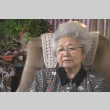
Yone Bartholomew Interview I (ddr-densho-1000-4)
Nisei female. Born July 15, 1906, in Bedderavia, California. Was given for adoption by her parents to a couple who could not have children of their own. Grew up on a family farm and was one of the oldest Nisei in the Santa Barbara area of California. Incarcerated at the Puyallup Assembly Center, Washington, and Minidoka …
vh
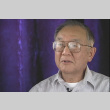
Henry Miyatake Interview VI (ddr-densho-1000-58)
Nisei male. Born April 28, 1929, in Seattle, Washington. Incarcerated at Puyallup Assembly Center and Minidoka concentration camp, Idaho. Had some key childhood experiences with discrimination that made him a self-described, "independent thinker," and later, an influential figure in the Japanese American community. While a teenager in camp, he wrote and defended an essay criticizing the …
vh
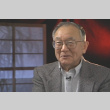
Henry Miyatake Interview II (ddr-densho-1000-54)
Nisei male. Born April 28, 1929, in Seattle, Washington. Incarcerated at Puyallup Assembly Center and Minidoka concentration camp, Idaho. Had some key childhood experiences with discrimination that made him a self-described, "independent thinker," and later, an influential figure in the Japanese American community. While a teenager in camp, he wrote and defended an essay criticizing the …
img
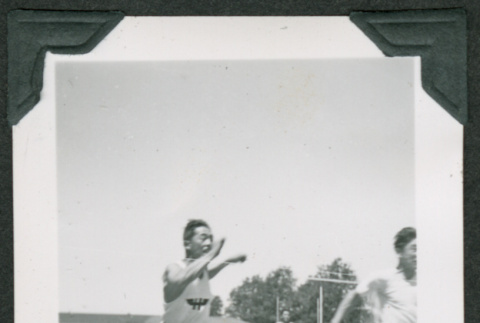
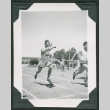
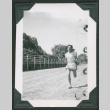
Shoso Nakamoto competing in track race (ddr-densho-475-588)
Black and white photograph of Shoso Nakamoto running in a track race. Written below the image is: "C.C.A.L. 50 YD.&100 YD. Record-Holder" in white pencil. Written along the top of the album page is: Shoso Nakamoto 1941 'Hayseed' Captain" in white pencil.
img
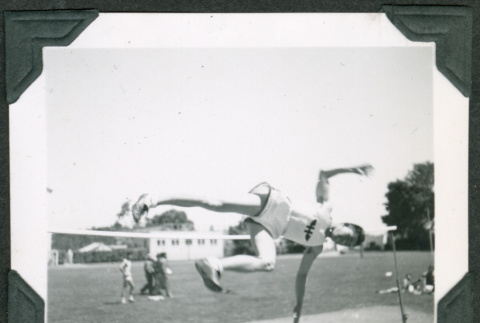
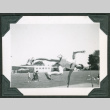
Shoso Nakamoto high jumping (ddr-densho-475-593)
Black and white photograph of Shoso Nakamoto, the 1941 "Hayseed" captain, in the midst of a high jump. Written along the top of the album page is: Shoso Nakamoto 1941 'Hayseed' Captain" in white pencil. Written along the bottom of the album page is: "'Sho' in Action... Take Off..... Over the Bar........ And Over'" in white …
img
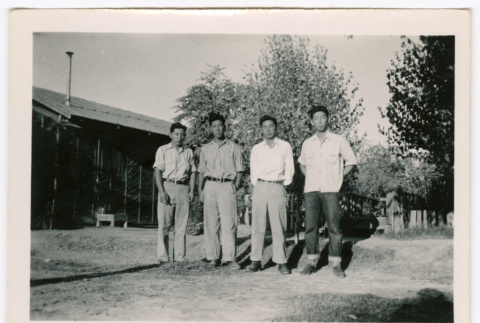
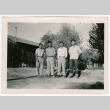
Four men (ddr-densho-475-181)
Black and white photograph of four unidentified young men standing in front of a tree.
img
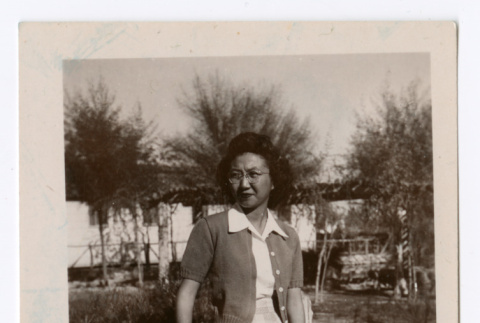
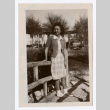
Yoshiko Mae Miwa (ddr-densho-475-331)
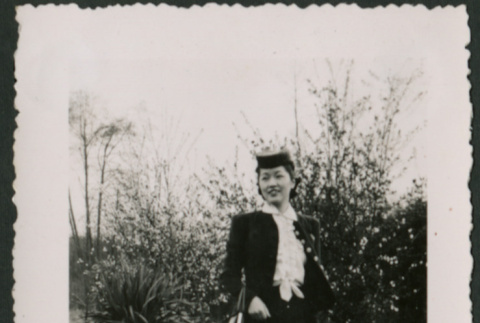
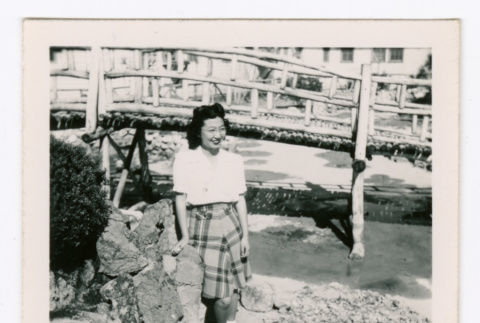
Black and white photograph of Yoshiko Mae (Miwa) Higaki leaning against the wooden railing of a footbridge.
img
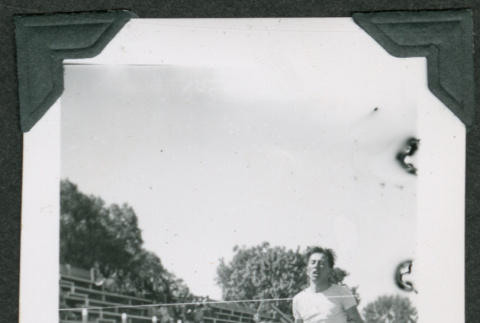
Tak Shiba (ddr-densho-475-605)
Black and white photograph of Tak Shiba about to cross the finish line in a track race. Written below the photograph on the album page is: "Tak Shiba of San Mateo" in white pencil.
img
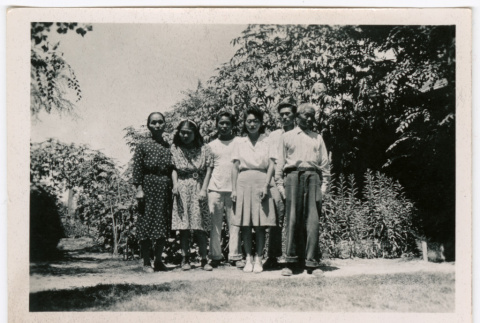
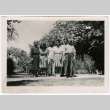
Group of 6 (ddr-densho-475-184)
Black and white family photo of six unidentified people posed in front of a garden.
img
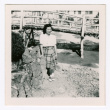
Mae Miwa (ddr-densho-475-326)
Black and white photograph of Yoshiko Mae (Miwa) Higaki in a garden with footbridge in the background.
img
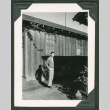
Frank Miwa (ddr-densho-475-547)
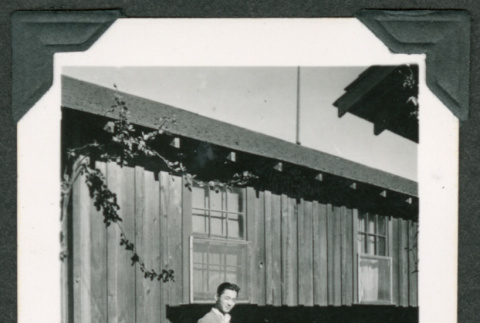
Black and white photograph of Frank Hidenobu Miwa in a sweater standing next to wooden building. Note from donor: "Frank"
img
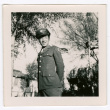
Soldier in uniform (ddr-densho-475-197)
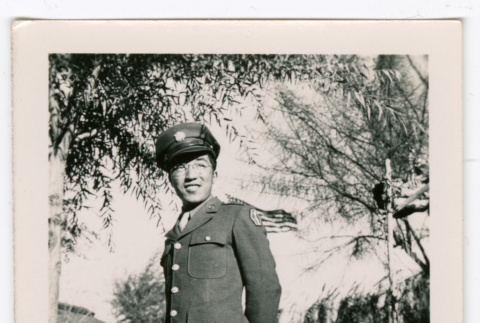
Black and white photograph of an unidentified man in an American military uniform.
img
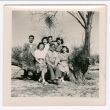
Group of 7 (ddr-densho-475-327)
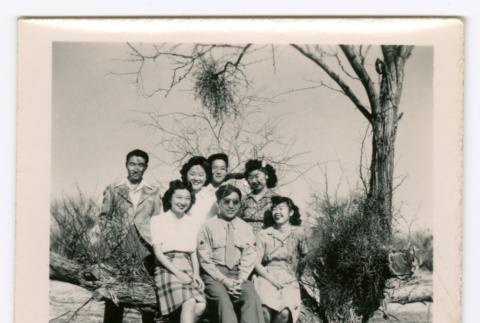
Black and white photograph of a group of seven young adults, including one military service member, sitting together on a bent tree.
img
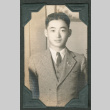
Frank Miwa (ddr-densho-475-728)
Black and white portrait of a Frank Hidenobu Miwa. Donor note: Frank