Post-World War II
Japan
(304)
Post-World War II
(1654)
1654 items

1654 items

doc
Crystal City Chatter Issue 34 (ddr-densho-537-44)
Issue 34 includes a message from the association president, personal stories from WWII, letters to the editor, and more. Included in the personal stories section is newsletter author, Sumi Utsushigawa-Shimatsu's story.
img
Gomonshu and Lady Ohtani's Visit to Portland (ddr-one-1-714)
Black and white photographic negative of a woman bowing to Gomonshu Kosho Ohtani and Lady Yoshiko Ohtani inside the train station. Gomonshu Koshi Ohtani was the leader of the Jodo Shinshu Hongwaniji-ha Buddhist sect, and was visiting Portland for the first time since the end of World War II with his wife Lady Yoshiko Ohtani.
img
Gomonshu and Lady Ohtani's Visit to Portland (ddr-one-1-712)
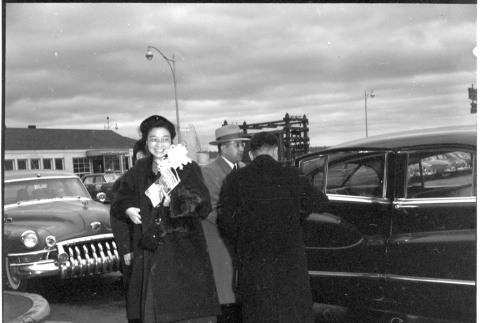
Black and white photographic negative of Lady Yoshiko Ohtani walking away from a parked car. Her husband, Gomonshu Koshi Ohtani stands behind her exiting the car. Gomonshu Koshi Ohtani was the leader of the Jodo Shinshu Hongwaniji-ha Buddhist sect, and was visiting Portland for the first time since the end of World War II with his …
doc
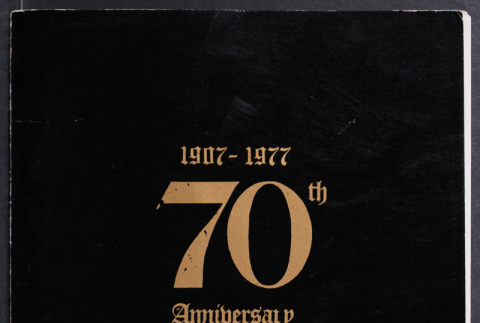
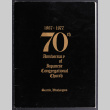
70th Anniversary of the Japanese Congregational Church (ddr-densho-474-53)
The Japanese Congregational Church's 70th Anniversary book traces the history of JCC within the context of national and local events.
img
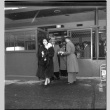
Gomonshu and Lady Ohtani's Visit to Portland (ddr-one-1-708)
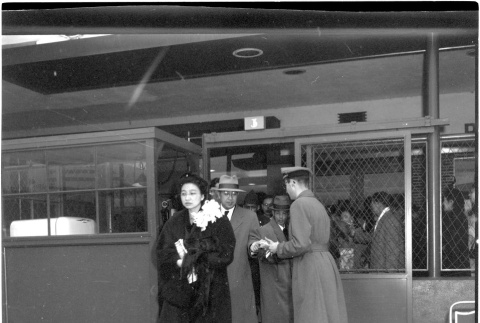
Black and white photographic negative of Gomonshu Koshi Ohtani and Lady Yoshiko Ohtani disembarking from a train upon their arrival in Portland. Gomonshu Koshi Ohtani was the leader of the Jodo Shinshu Hongwaniji-ha Buddhist sect, and was visiting Portland for the first time since the end of World War II with his wife Lady Yoshiko Ohtani.
img
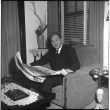
Gomonshu and Lady Ohtani's Visit to Portland (ddr-one-1-707)
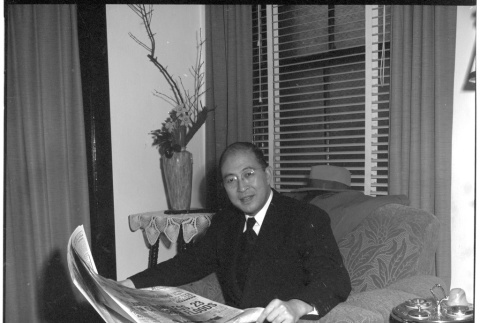
Black and white photographic negative of Gomonshu Koshi Ohtani sitting in an armchair reading a newspaper. Gomonshu Koshi Ohtani was the leader of the Jodo Shinshu Hongwaniji-ha Buddhist sect, and was visiting Portland for the first time since the end of World War II with his wife Lady Yoshiko Ohtani.
img
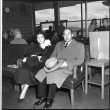
Gomonshu and Lady Ohtani's Visit to Portland (ddr-one-1-711)
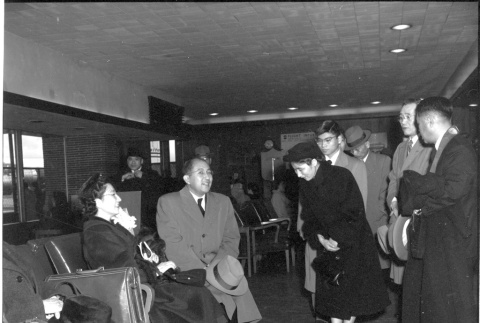
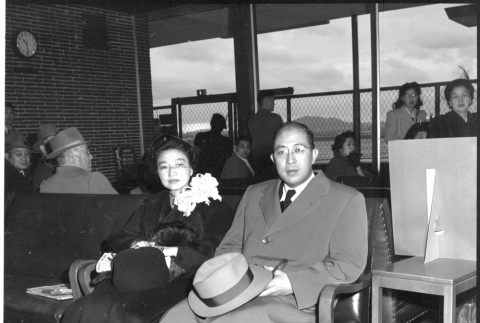
Black and what photographic negative of Gomonshu Koshi Ohtani and Lady Yoshiko Ohtani sitting in leather chairs at the train station. Gomonshu Koshi Ohtani was the leader of the Jodo Shinshu Hongwaniji-ha Buddhist sect, and was visiting Portland for the first time since the end of World War II with his wife Lady Yoshiko Ohtani.
img
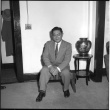
Gomonshu and Lady Ohtani's Visit to Portland (ddr-one-1-709)
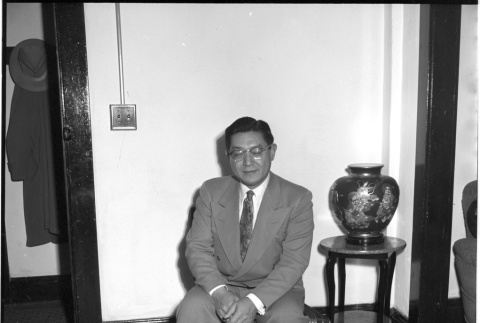
Black and white photographic negative of an unidentified Japanese man sitting on a chair next to a vase.
img
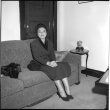
Gomonshu and Lady Ohtani's Visit to Portland (ddr-one-1-710)
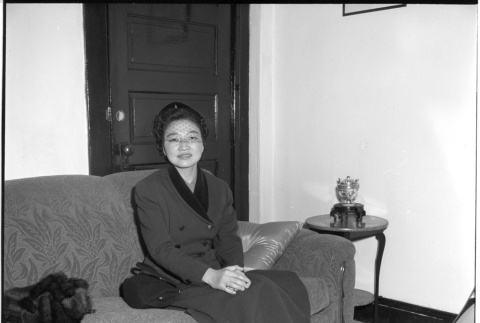
Black and white photographic negative of Lady Yoshiko Ohtani sitting on a couch. Gomonshu Koshi Ohtani was the leader of the Jodo Shinshu Hongwaniji-ha Buddhist sect, and was visiting Portland for the first time since the end of World War II with his wife Lady Yoshiko Ohtani.
img
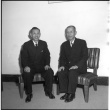
Gomonshu and Lady Ohtani's Visit to Portland (ddr-one-1-713)
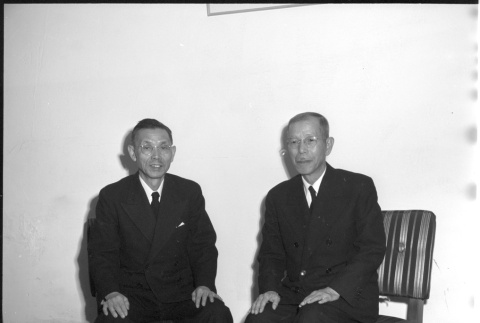
Black and white photographic negative of two unidentified men sitting in chairs against a white wall.
doc
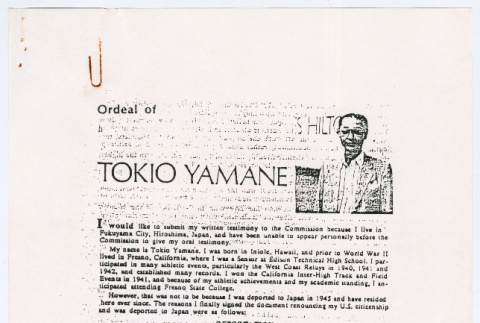
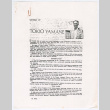
Ordeal of Tokio Yamane (ddr-densho-1007-1825)
Tokio Yamasaki's statement to the Commission on Wartime Relocation and Internment of Civilians describing the abuse and discrimination he faced while incarcerated which ultimately led to his renouncement of his U.S. citizenship resulting in his deportation to Japan He then argues his support for redress and reparations.
img
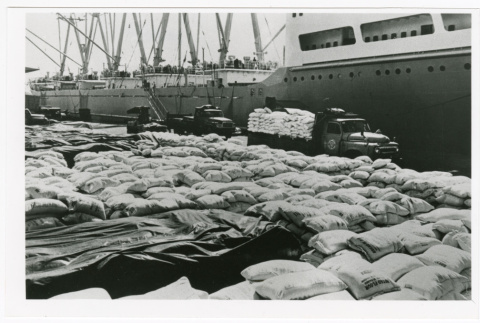
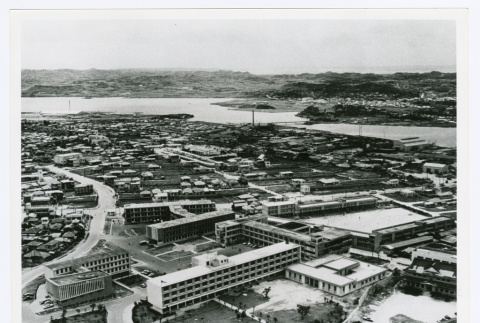
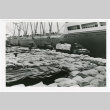
Food aid arrives in Naha, Okinawa as part of Food-for-Freedom program (ddr-densho-1007-126)
Newspaper clipping and captions on back.
img
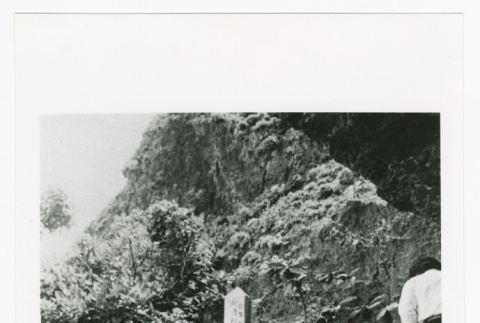
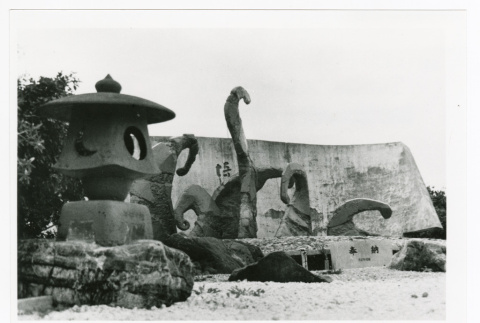
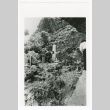
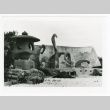
Monument at Peace Prayer Park on Okinawa Island (ddr-densho-1007-109)
Caption on back
Area also known as Suicide Cliff.
Area also known as Suicide Cliff.