
2806 items
2806 items
doc
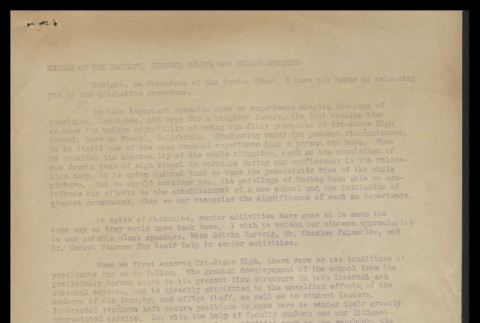
Member of the faculty, honored guests, and fellow students (ddr-csujad-55-1912)
Speech given by Andrew Sugiyama, President of the Senior Class, at the commencement ceremony for Tri-State High School, Tule Lake, covering the development of Tri-State High School and the challenges and responsibilities facing Nisei. See this object in the California State Universities Japanese American Digitization project site: sac_jaac_1915
doc
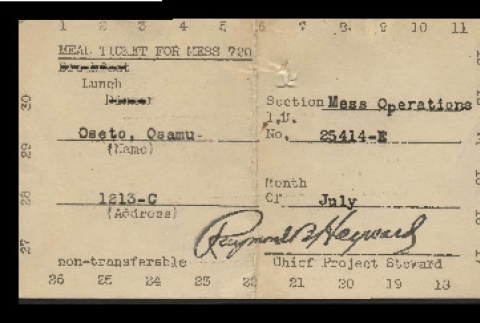
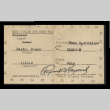
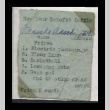
Meal ticket for mess 720 (ddr-csujad-55-1898)
Meal ticket belonging to Osamu Oseto at Tule Lake incarceration camp. See this object in the California State Universities Japanese American Digitization project site: sac_jaac_1901
doc
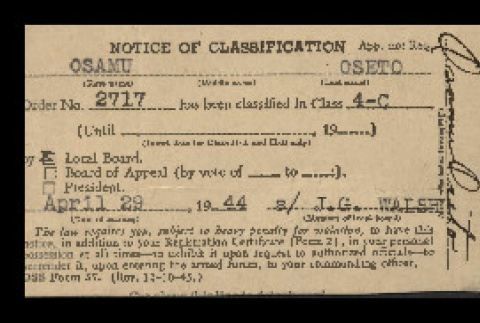
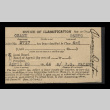
Notice of classification, DSS form 57 rev., Osamu Oseto (ddr-csujad-55-1897)
Notice of Classification in the Selective Service for Osamu Oseto. See this object in the California State Universities Japanese American Digitization project site: sac_jaac_1900
img
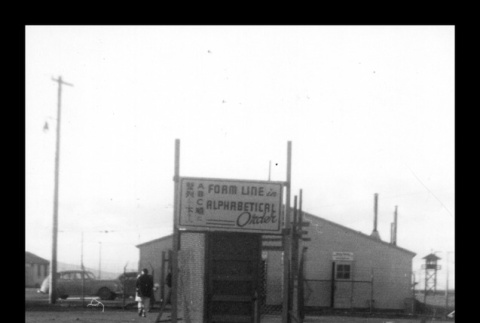
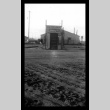
Form line in alphabetical order (ddr-csujad-55-2228)
Black and white photograph depicting a structure with a sign in English and Japanese that reads, "Form Line in Alphabetical Order" at Tule Lake incarceration camp. See this object in the California State Universities Japanese American Digitization project site: sac_jaac_2331
doc
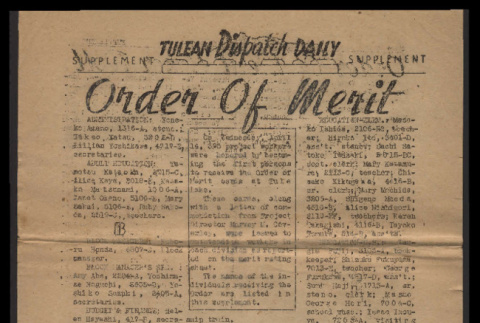
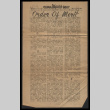
Tulean dispatch daily supplement (ddr-csujad-55-2398)
Supplement to the Tulean dispatch daily listing the names of individuals at Tule Lake incarceration camp who have received the Order of Merit. Also includes articles on the Merit Board Committee, commendation from Director Coverley, and selection procedures. See this object in the California State Universities Japanese American Digitization project site: sac_jaac_2504
doc
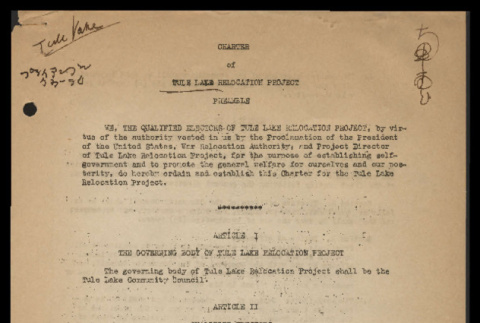
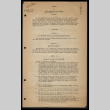
Charter of Tule Lake Relocation Project (ddr-csujad-55-784)
Charter document for the Tule Lake incarceration camp. Includes preamble and the following Articles: 1. Governing body; 2. Qualified electors; 3. Community Council and councilmen; 4. Officers of Community Council; 5. Community Council meetings; 6. Tax and license, gifts, and limitation to use; 7. Impeachment of officers; 8. Initiative, referendum, and recall; 9. Judicial Commission; 10. …
doc
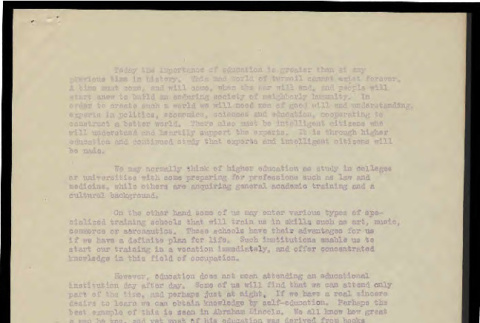
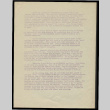
Commencement speech (ddr-csujad-55-1913)
Speech given by Ellen Hasegawa at the commencement ceremony for Tri-State High School, Tule Lake, covering the various vocations and educational experiences available to Nisei. See this object in the California State Universities Japanese American Digitization project site: sac_jaac_1916
doc
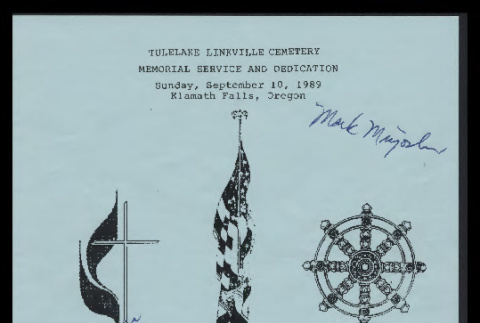
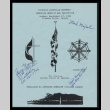
Tulelake Linkville Cemetery memorial service and dedication (ddr-csujad-55-160)
Program for the Tule Lake Linkville Cemetery memorial service and dedication. Includes history of Tule Lake incarceration camp, background on the Linkville cemetery memorial project, acknowledgements, and project committee. See this object in the California State Universities Japanese American Digitization project site: sac_jaac_0162
img
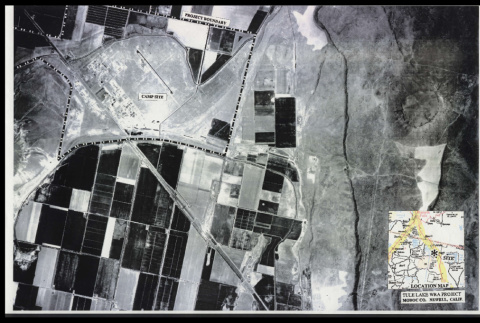
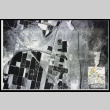
Tule Lake WRA Center (ddr-csujad-55-2474)
Aerial photographic map indicating the area boundary of the Tule Lake incarceration camp in Modoc County, California. See this object in the California State Universities Japanese American Digitization project site: sac_jaac_2580
doc
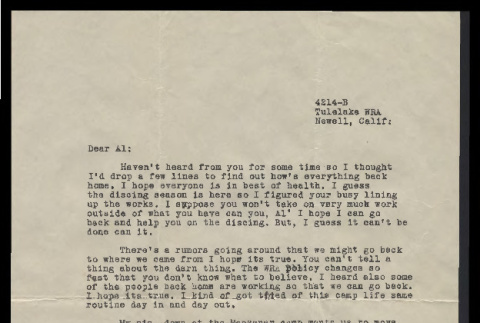
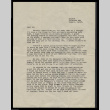
Letter from Herbert Tokutomi to Mr. Albert Saladana, April 13, 1943 (ddr-csujad-55-126)
Correspondence from Herbert Tokutomi to Albert Saladana discussing farming and life in the incarceration camp. See this object in the California State Universities Japanese American Digitization project site: sac_jaac_0128
doc
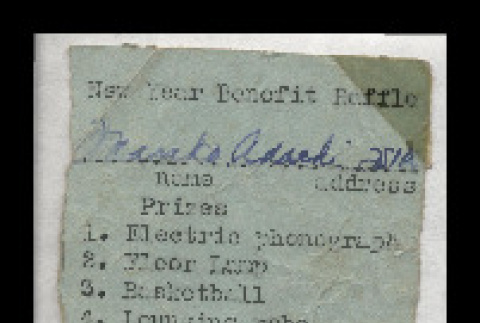
New Year benefit raffle (ddr-csujad-55-1962)
New Year Benefit raffle ticket, belonging to Masako Adachi, for an event at Tule Lake incarceration camp. From the Masako Adachi scrapbook. See also sac_jaac_1953. See this object in the California State Universities Japanese American Digitization project site: sac_jaac_1965
img
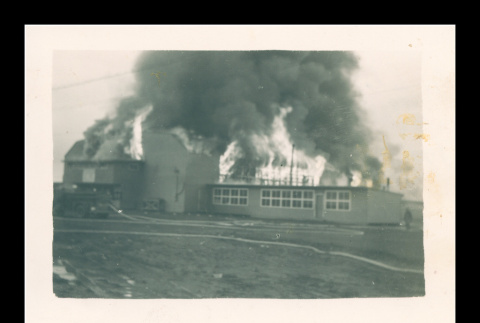
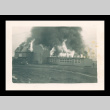
Fire at high school gym in Tule Lake (ddr-csujad-55-2208)
Black and white photograph of the high school gym on fire at Tule Lake incarceration camp. See this object in the California State Universities Japanese American Digitization project site: sac_jaac_2311
doc
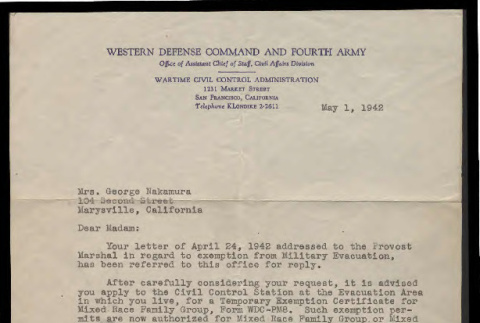
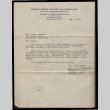
Letter from Herman P. Goebel, Jr., Captain, Cavalry, Adjutant, to Mrs. George Nakamura, May 1, 1942 (ddr-csujad-55-2387)
Correspondence from Herman Goebel to Dorothy Nakamura regarding Nakamura's inquiry about the eligibility of her mixed-race family to be released from the Tule Lake incarceration camp. See this object in the California State Universities Japanese American Digitization project site: sac_jaac_2493
doc
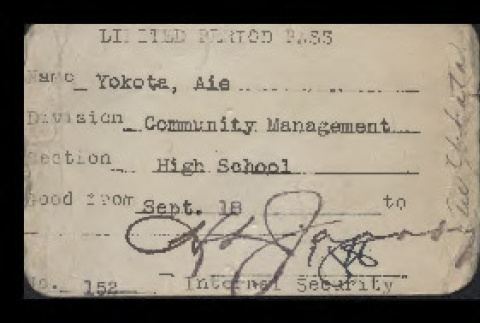
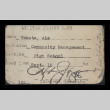
Limited period pass (ddr-csujad-55-219)
Limited Period Pass card issued on September 8, 1944? belonging to Aie Yokota. See this object in the California State Universities Japanese American Digitization project site: sac_jaac_0221
doc
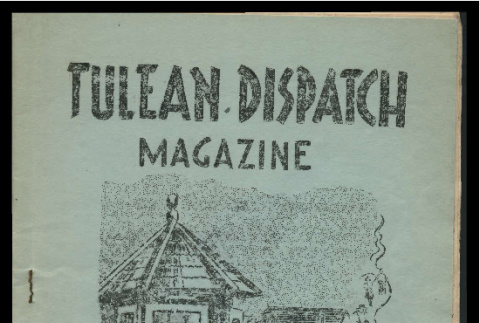
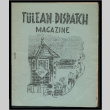
Tulean dispatch magazine section, no. 11 (July 1943) (ddr-csujad-55-1946)
Monthly publication at Tule Lake incarceration camp including stories, poems, commentary and creative writing. Current issue includes an essay, "Does it Pay to Stay Here" by Rev. Shigeo Tanabe, a poem, "Relocation" by Minoru Kimura, "Nisei Personality Adjustment" by James Sakoda, "Gloom" by Buster Sawai, "Outside" by Shuji Kimura, Nisei personality profile on Rev. Shigeo Tanabe, …
doc
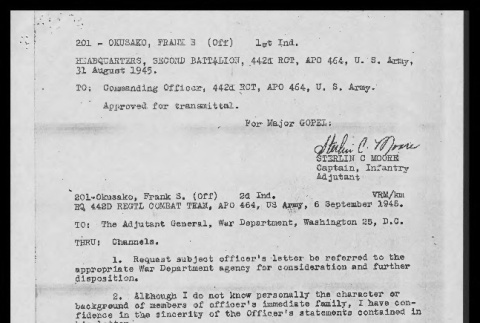
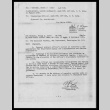
Memo from V.R. Miller, Colonel, Infantry, Commanding, to the Adjutant General, War Department, Washington 25, D.C., September 6, 1945 (ddr-csujad-55-230)
Memorandum of understanding from V. R. Miller regarding Frank Okusako's request for relocation of his family from the Tule Lake incarceration camp. See this object in the California State Universities Japanese American Digitization project site: sac_jaac_0232
img
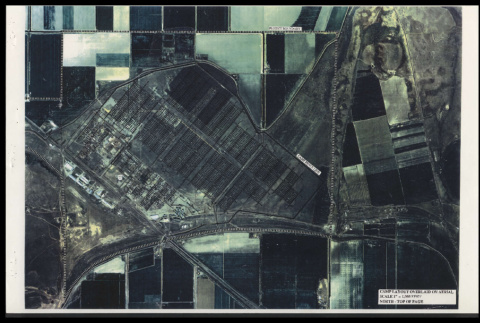
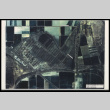
Camp layout overlaid on aerial (ddr-csujad-55-2475)
Boundary of the Tule Lake incarceration camp overlaid on an aerial photograph of the camp and surrounding area in Modoc County, California. See this object in the California State Universities Japanese American Digitization project site: sac_jaac_2581
doc
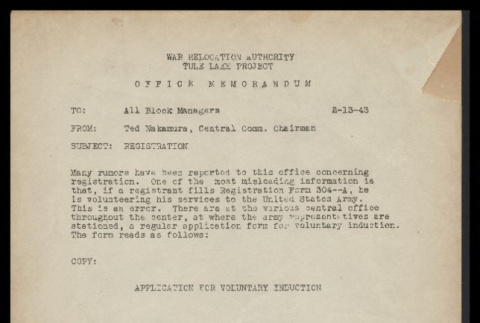
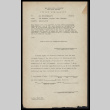
Memo from Ted Nakamura, Central Comm. Chairman, to all block managers, DSS form 165, February 13, 1943 (ddr-csujad-55-188)
Memorandum of understanding from Ted Nakamura to Block Managers at Tule Lake regarding registration form WRA 304a (also known as the "loyalty questionnaire") and whether or not an individual is volunteering his services for the United States Army when filling out the form. Memo also includes a copy of the Application for Voluntary Induction, DSS Form …
doc
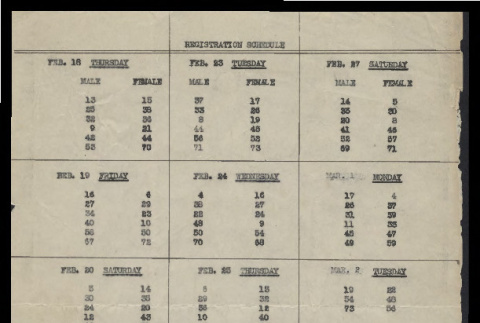
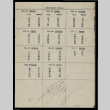
Registration schedule (ddr-csujad-55-189)
Schedule for incarcerees to fill out the Statement of United States Citizen of Japanese Ancestry (form DSS 304a) and Application for Leave Clearance (form WRA 126) from February 18 through February 26, 1943. Schedule includes dates for males and females from each block in the Tule Lake camp. See this object in the California State Universities …
doc
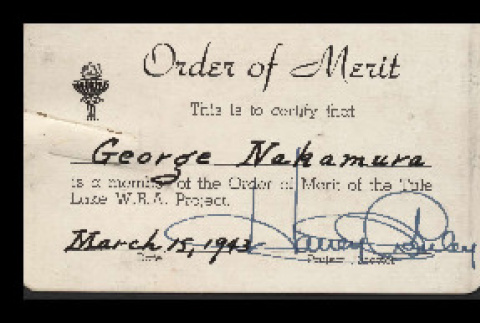
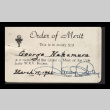
Order of Merit of the Tule Lake W.R.A. Project membership card (ddr-csujad-55-2417)
Card for George Hideo Nakamura regarding his recognition in the Order of Merit at Tule Lake incarceration camp. See also sac_jaac_2523. See this object in the California State Universities Japanese American Digitization project site: sac_jaac_2523
doc
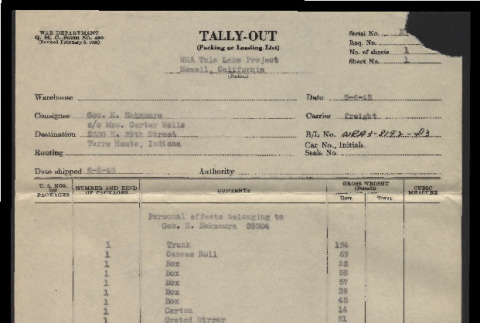
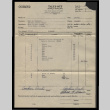
Tally-out (packing or loading list), Q.M.C. Form no. 490, George Hideo Nakamura (ddr-csujad-55-2404)
List of personal property belonging to George Hideo Nakamura being shipped from Tule Lake incarceration camp to Terre Haute, Indiana. See this object in the California State Universities Japanese American Digitization project site: sac_jaac_2510
doc
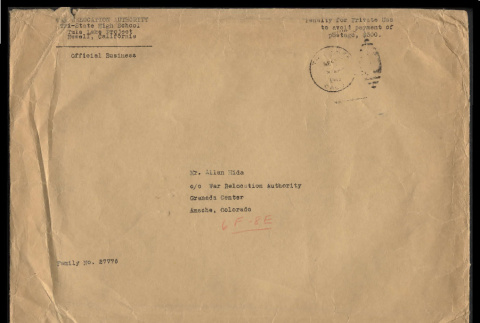
Envelope from the Tri-State High School, Tule Lake Project, to Mr. Allan Minoru Hida, Granada Center (ddr-csujad-55-1990)
Envelope from the Tri-State High School, Tule Lake incarceration center to Mr. Allan Minoru Hida, Granada Center. See this object in the California State Universities Japanese American Digitization project site: sac_jaac_1993
img
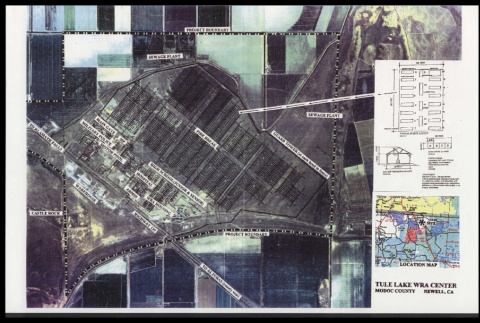
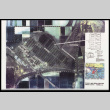
Tule Lake WRA Center (ddr-csujad-55-2476)
Aerial map of the Tule Lake incarceration camp indicating the location of the project boundary, guard towers, schools, main gate, police, hospital, administrative buildings, barracks, and roads. See this object in the California State Universities Japanese American Digitization project site: sac_jaac_2582
doc
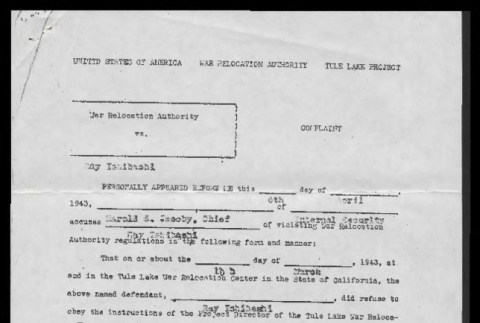
Complaint, War Relocation Authority vs. Ray Ishibashi (ddr-csujad-55-248)
Complaint regarding Ray Ishibashi's refusal to register at Tule Lake incarceration camp. See this object in the California State Universities Japanese American Digitization project site: sac_jaac_0250
doc
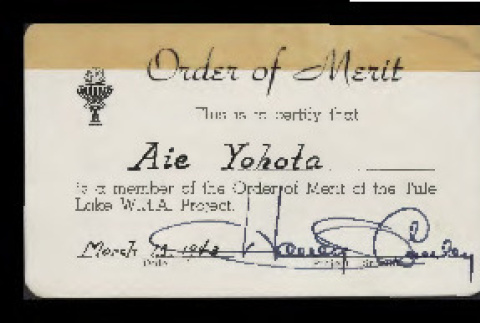
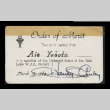
Order of Merit of the Tule Lake W.R.A. Project membership card (ddr-csujad-55-215)
Membership card for Aie Yokota in the Order of Merit. See this object in the California State Universities Japanese American Digitization project site: sac_jaac_0217