
2806 items

2806 items

img
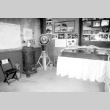
Artifacts (ddr-densho-35-22)
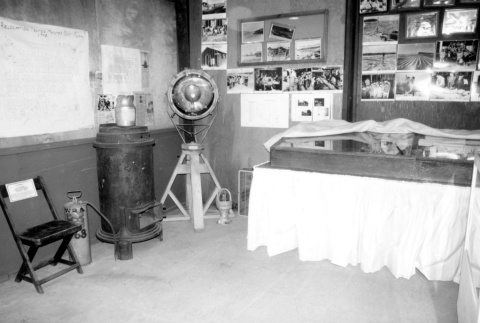
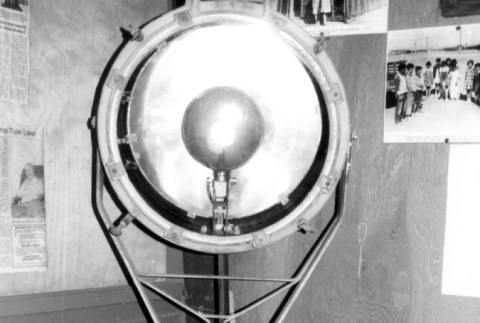
The Tule Lake Museum is located on the local fairgrounds and contains a display of artifacts from the Tule Lake concentration camp. The large searchlight is from a camp guard tower. Coal-burning stoves such as this one, presumably from barracks apartment, were the main source of heat for the Japanese Americans. To the left of the …
img
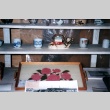
Artifacts (ddr-densho-35-40)
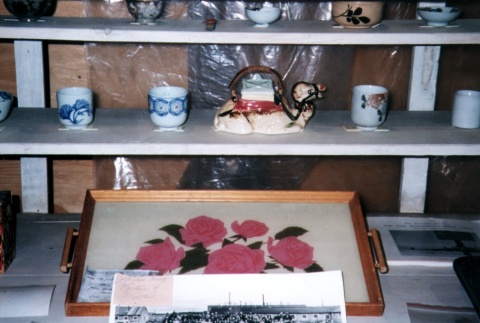
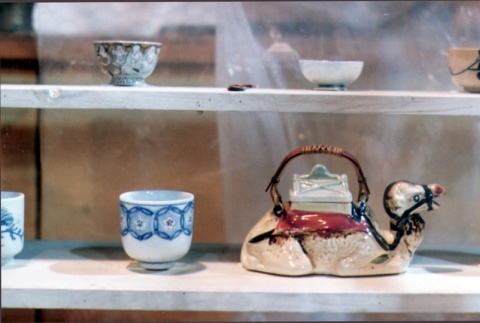
The Tule Lake Museum, located on the local fairgrounds, houses a display of artifacts from the Tule Lake concentration camp. Shown here are a variety of tea and sake cups, a teapot, and a bunka (Japanese embroidery) picture. The photo below is a panoramic view of the camp.
img
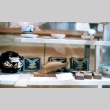
Artifacts (ddr-densho-35-41)
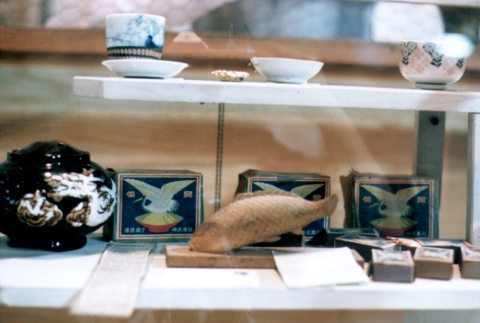
The Tule Lake Museum, located on the local fairgrounds, houses a display of artifacts that belonged to Japanese Americans from the Tule Lake concentration camp.
img
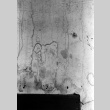
Artifacts (ddr-densho-35-21)
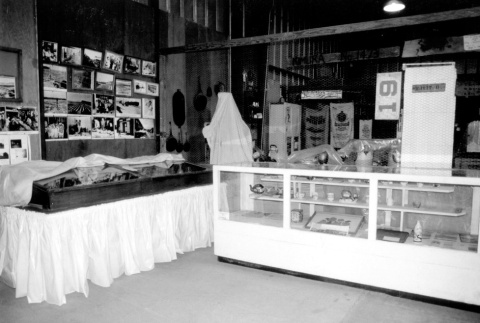
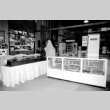
The Tule Lake Museum is located on the Tule Lake Fairgrounds and houses a display of artifacts from the Tule Lake concentration camp. This is a view of the Tule Lake concentration camp exhibit. The cases primarily contain pottery and artwork that belonged to the camp inmates.
img
Memorial plaque (ddr-densho-35-1)
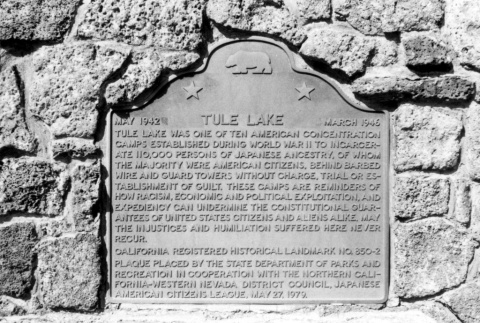
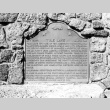
This plaque is part of a monument erected in 1979 by the JACL and California State Department of Parks and Recreation to commemorate the Tule Lake concentration camp.
img
Barracks and Castle Rock (ddr-densho-35-44)
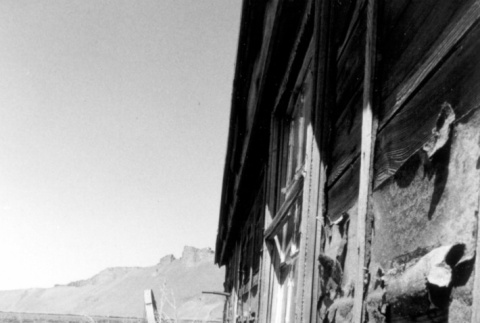
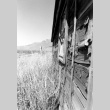
A rock formation that the camp inmates called "Castle Rock" can be seen in the background. After obtaining permission to go through the gates, Japanese Americans could climb to the top of the formation.
img
Artifacts, Tule Lake concentration camp (ddr-densho-35-39)
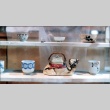
The Tule Lake Museum displays artifacts from the Tule Lake concentration camp. The teapot, tea cups, and sake cups belonged to the camp inmates.
img
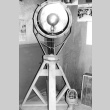
Guard tower searchlight (ddr-densho-35-26)
The Tule Lake Museum, located on the town's fairgrounds, displays artifacts from the Tule Lake concentration camp. Shown here is a searchlight from a guard tower.
vh
George Sakaye Nakano Interview (ddr-densho-400-17)
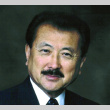
George Sakaye Nakano was born on November 24, 1935, in the Boyle Heights neighborhood of Los Angeles, California. George's parents were Kibei, born in Hawaii, then educated in Japan before returning to the U.S. Nakano grew up in Los Angeles until he was six years old. When WWII started, the Nakano family was incarcerated in the …
img
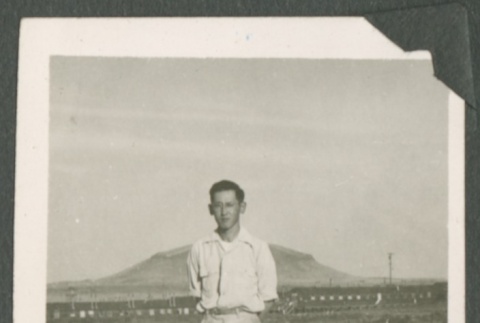
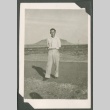
A man at Tule Lake, Abalone Hill in background (ddr-densho-328-40)
Caption in album: "Tule Lake / Beu [?] Ito / 1945."
doc
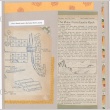
Page of Hisa Nimura Horiuchi Scrapbook (ddr-densho-325-20)
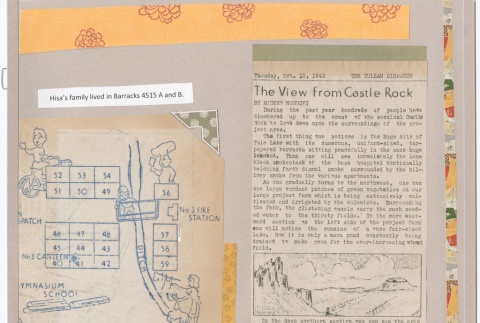
Second half of Tule Lake Concentration Camp map.
doc
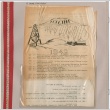
Page of Hisa Nimura Horiuchi Scrapbook (ddr-densho-325-27)
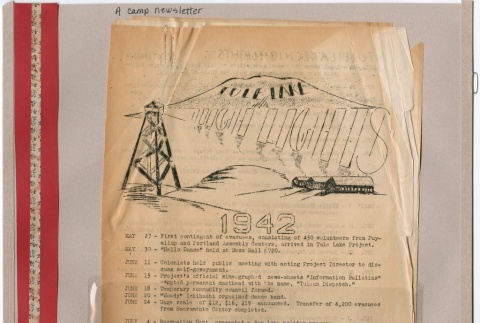
Timeline of highlights from 1942 and 1943 from Tule Lake concentration camp as well as several New Years columns.
img
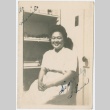
Nisei woman (ddr-densho-325-174)
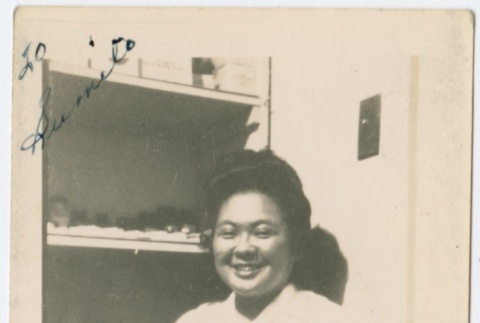
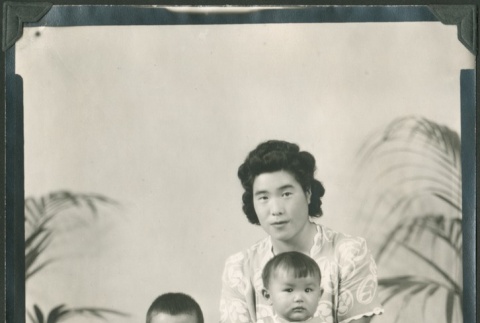
Hisa Nimura in her hospital aide uniform. The handwritten inscription on the front of the photograph reads "To Sumito Sincerely Hisa". Written on the back of the photograph "July 1944).
img
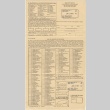
Selective service questionnaire (ddr-densho-333-50)
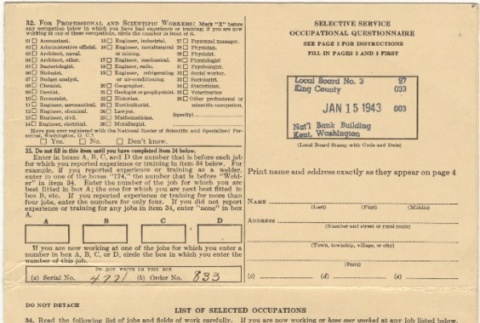
Occupational questionnare for Min sent to at Pinedale with address crossed out and Tule Lake address written in
doc
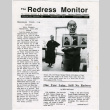
The Redress Monitor (ddr-densho-381-52)
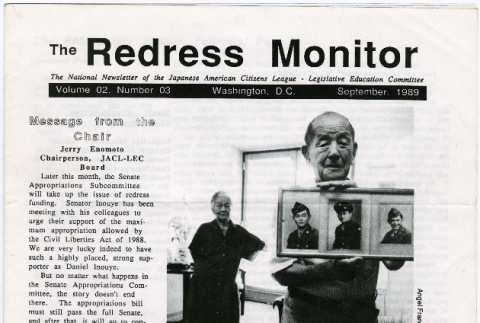
The national newsletter of the Japanese American Citizens League; volume 2, number 3. Included are articles on: waiting for redress, messages from the editor and chair, fundraising information, a statement from Senator Inouye, and more.
doc
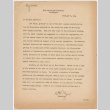
Letter to project directors about the "Kibei problem" (ddr-densho-381-23)
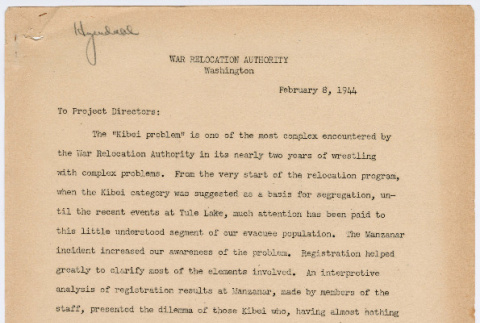
Myer describes Kibei as a "complex problem" in his letter to the project directors. He encloses a report from January 28, 1944, detailing differences between Kibei and Nisei, reasons Kibei were sent for education in Japan, and Kibei reactions to being detained in concentration camps.